Innovation
and research spirit!
Oilseed rape on track for success
Genetics that deliver

KWS is further expanding its strong position in the European hybrid oilseed rape market: Market data (© Kynetec 2017 –2026) shows that KWS, with a market share of 17 percent, is one of Europe’s leading hybrid oilseed rape breeders – with a clear upward trend. It’s even the market leader in Germany, France, and Hungary. In Germany, KWS VAMOS has been highly successful: This variety is currently the best-selling oilseed rape variety here and is grown on 13 percent of Germany’s oilseed rape acreage.
Success doesn’t just happen by chance. KWS has spent years systematically investing in advancing oilseed rape breeding. The focus is on varieties that combine high yields with greater resilience, for example, to major diseases such as phoma or clubroot. Improved nitrogen efficiency (N-ADAPT) and InsectPROTECT varieties that protect against cabbage-stem flea beetle also help offer solutions to current and future challenges in oilseed rape cultivation. That pays off: Official variety testing shows that KWS candidates have made considerable progress over the past ten years, on average around 1.5 percent per year in terms of yield and oil content.
A success that begins with close observation, targeted selection and breeding expertise, and ultimately pays off for farmers out on the field.
KWS, vly, and the organic pea
A new take on pea protein

In collaboration with Berlin-based food-tech company vly,


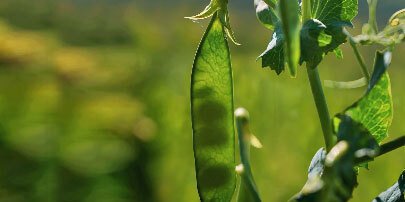
variety with a particularly mild flavor that is ideally suited for our partner’s plant-based milk alternatives. The resulting plant-based protein is now being used for the first time in the new milk alternative “vly Bio High Protein.”
KWS combined modern breeding methods with food analytics to identify suitable pea varieties for this application. The example shows how modern plant breeding can help drive the development of new plant-based foods.Space for research
Focus on plant health

World of farming
Profit from pests
For testing and research activities, phytopathologists at KWS cultivate numerous pathogens and insects.
With a new Phytopathology Center, KWS is expanding its research into plant health at the Einbeck site in Germany. Spread over around 4,600 square meters, it will focus on diagnostics, monitoring, and the development of resistant varieties. While less chemical crop protection is being used in agriculture, the pressure from pathogens and pests continues to rise as a result of climate change. That increases the demands on phytopathology. The new center
features, among other things, a 2,200-square-meter greenhouse with 28 compartments in which different climatic conditions can be simulated. This creates a central research element for plant health and resistant varieties, helping to support stable yields. KWS is investing around € 25 million in the project.
Silage corn of the future
More from every feed ration


Under the name NuTRIO, KWS is developing a new generation of silage corn hybrids that combine high yields, high starch content, and improved cell wall digestibility. For dairy farming, that means more available energy and more efficient feeding. Silage corn is the most important forage on many dairy farms. Its feed value depends primarily on yield, starch content, and digestibility.
KWS EnergyBOOST hybrids are known for their high starch content. That is now supplemented by a naturally occurring


That allows cows to gain additional energy from the plant, digest the feed faster, and ingest more.
In addition to their forage quality, the new NuTRIO hybrids are also impressive from an agronomic standpoint. They are based on proven breeding material and offer yield stability, disease resistance, and standability. Extensive field and feeding trials with partners such as Wageningen University and the French agricultural research institute ARVALIS demonstrate the crop’s performance under on-farm conditions. The first variety of this new generation of silage corn is scheduled to hit the market in France in the fall of 2027. The plan is to then introduce it gradually in the most important European silage corn markets.